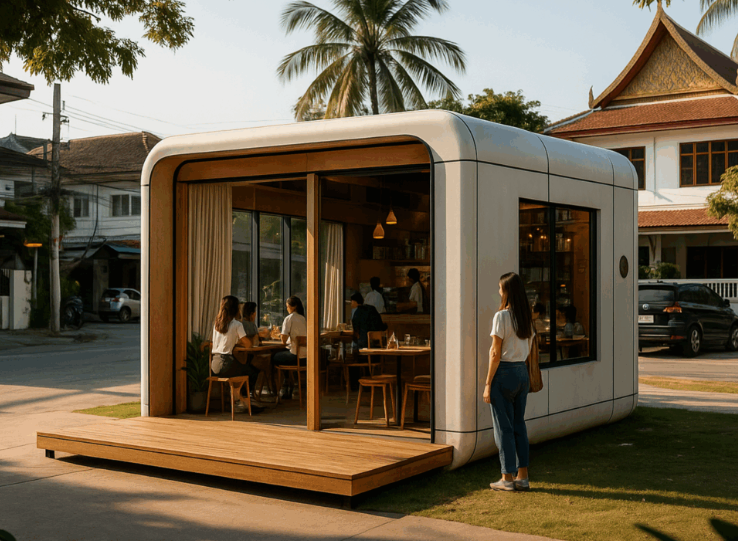
Prefabricated homes let you build faster, with more predictable costs and energy-efficient results because much of the work happens in a factory under controlled conditions. You can get a high-quality, climate-ready home delivered and assembled faster than traditional construction, often with better cost certainty and less weather-related delay.
This article walks through what prefab homes are, how different types compare, and the practical benefits and trade-offs to weigh when planning your project. Expect clear guidance on pricing, codes, financing, and choosing a builder so you can decide whether prefab fits your timeline, budget, and long-term goals.
What Are Prefab Homes?
Prefab homes are houses built from factory-made components that arrive on site for assembly. You get faster schedules, tighter quality control, and clearer costs compared with traditional site-built construction.
Definition and Key Features
A prefab (prefabricated) home is assembled from modules, panels, or pre-cut kits manufactured in a controlled facility. You benefit from consistent workmanship, reduced weather delays, and less material waste because much of the build happens indoors.
Key features you should look for:
- Precision-built components with factory tolerances that improve fit and finish.
- Energy-efficient assemblies: sealed envelopes, factory-installed insulation, and often higher-performance windows.
- Predictable timelines and pricing because factory production and site work run in parallel.
You still must obtain local permits and inspections. Manufacturers typically deliver certified components that meet regional building codes, but final compliance depends on site-level assembly and utility hookups.
Types of Prefabricated Homes
Prefab homes fall into three main categories: modular, panelized, and manufactured (mobile) homes. Each type has distinct transport, foundation, and code-acceptance characteristics you need to consider.
- Modular: Complete volumetric units built to the same local codes as site-built homes. Modules join on a permanent foundation; financing and resale resemble conventional houses.
- Panelized: Flat wall, floor, and roof panels shipped to your site for on-site assembly. You gain design flexibility and lower shipping volume compared with full modules.
- Manufactured (HUD-code): Built on a steel chassis under the federal HUD code; often less expensive but may have different zoning and financing rules.
Other forms include kit homes (pre-cut pieces you assemble or hire local builders to assemble) and container homes (repurposed shipping containers). Choose based on budget, site constraints, design preference, and financing options.
Construction Process
The prefab construction process splits work between the factory and your site to shorten schedules and reduce risk. Factory work includes framing, insulation, rough mechanicals, and often interior finishes. You get consistent quality control through inspections and production checklists inside the plant.
On-site steps include foundation work, delivery and craning of modules or panels, assembly and sealing, and final MEP (mechanical, electrical, plumbing) hookups. Typical sequence:
- Site preparation and foundation pouring.
- Factory manufacture of components (weeks to months).
- Transport and set—crane-install modules or erect panels.
- On-site finishing: seals, connections, exterior cladding touches, and inspections.
Because factory and site activities overlap, you will often see total project time reduced by 30–50% versus traditional builds. Still plan for site access, crane time, and utility coordination to avoid delays.
Benefits and Considerations of Prefab Homes
Prefab homes can reduce construction time, lower some costs, improve energy performance, and offer various design paths—from fixed modular plans to highly customizable panelized systems. You’ll still need to budget for land, site work, permits, and utility connections.
Cost Efficiency
Prefab construction often shortens build schedules because modules or panels are made in a factory while site work happens in parallel. That overlap can cut labor costs and reduce interest or temporary housing expenses when compared to a long on-site build.
You should expect savings in material waste and purchasing power: factories buy bulk materials and produce repeatable components, which lowers per-unit costs. However, factor in land purchase, site preparation (grading, foundation, driveway), and transportation for modules—these can offset factory savings.
Ask builders for a line-item quote that separates factory price, site work, transport, and utility hookups. Compare total project cost to a comparable local stick-built home rather than relying on headline prefab prices alone.
Sustainability Factors
Prefab production in controlled environments reduces waste and improves quality control, which often improves thermal performance and reduces air leaks. You can get higher insulation levels, precise window installation, and consistent sealing that lower heating and cooling loads.
Many manufacturers offer energy-efficient systems—LED-ready wiring, high-performance HVAC options, solar-ready roofs, and near-zero VOC materials. These choices reduce operating costs and improve indoor air quality.
Consider embodied carbon from shipping modules and concrete foundations. Confirm the builder’s material sourcing, waste-reduction practices, and energy modeling. Ask for blower-door test results and expected Energy Use Intensity (EUI) numbers when possible.
See also: Click, Buy, Brighten: How Online Skylight Shopping Is Changing Homes
Customization Options
Prefab spans a spectrum from fixed, catalog models to highly flexible modular systems. Catalog homes give you quick selection and lower design fees, while modular and panelized systems let you change room layouts, finish materials, and facade treatments.
You can often customize kitchen layouts, floor plans, window sizes, and built-in systems, but major structural changes are more expensive than cosmetic upgrades. Structural modules limit span changes; panelized systems allow more on-site variation.
Clarify what’s included in base pricing: finishes, cabinetry, appliances, plumbing fixtures, and site work often cost extra. Review change-order policies and lead times for custom finishes so you won’t face unexpected delays or markup.
Design Trends
Contemporary prefab trends emphasize open plans, large glazed areas, and integrated indoor–outdoor living to maximize daylight and connection to site. You’ll see standardized modules combined in different configurations to create unique massing without full bespoke design fees.
Adaptive reuse of prefab elements—like detachable wings or future-addition modules—supports phased expansions and multi-generational living. Manufacturers increasingly offer smart-home integrations and factory-installed mechanical systems for consistent performance.
Material trends favor low-maintenance cladding (metal, fiber-cement), durable composite decking, and prefabricated exterior panels that speed installation. Ask to see recent project photos and performance data to confirm the aesthetic and technical quality you expect.