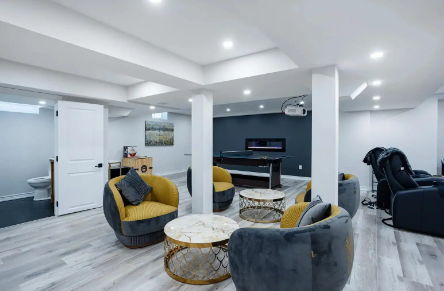
Looking to transform your basement in Hamilton into usable, valuable space? Start by understanding what the project will cost, which permits you’ll need, and how to choose a contractor who handles structural work, waterproofing, electrical, and finishing with licensed trades and clear warranties. A well-planned basement renovation Hamilton will protect your home, meet local permitting rules, and add practical living space or rental income when you hire experienced professionals.
You’ll learn how to plan a realistic budget, navigate permits, and vet contractors so your project finishes on time and on spec. Expect practical tips on waterproofing, layout choices, and questions to ask contractors that make the entire process smoother and reduce surprises.
Planning a Basement Renovation in Hamilton
You’ll need to balance money, permits, and layout choices to get a usable, code-compliant basement. Prioritize a realistic budget, confirm permit requirements, and pick designs that suit your daily needs and the home’s value.
Setting a Realistic Budget
List fixed costs first: structural repairs, waterproofing, and any required egress windows or doors. These items often consume 30–50% of a basement budget because of excavation, lintels, or window-well work.
Factor in permit fees, inspection costs, and trades: plumbing, electrical, HVAC, and framing. Obtain at least three written quotes and compare line-item costs so you can spot markups or missing scope items.
Include soft costs and contingency. Set aside 10–20% for change orders and 5–10% for design/engineering if you need drawings for permits. Decide which finishes you’ll splurge on (flooring, millwork) and where you’ll economize (paint, standard fixtures).
Hamilton Building Codes and Permits
Hamilton follows Ontario Building Code requirements; you must obtain permits for structural changes, new bathrooms, and legal secondary suites. Contact Hamilton’s building division to confirm required drawings and application forms before work begins.
Egress and ceiling height matter: habitable rooms generally need egress windows and minimum clearances. Mechanical and electrical upgrades require licensed trades and inspections; keep copies of trade certifications and inspection records.
If you plan a legal basement apartment, meet zoning, fire separation, and separate-metering rules. Submit complete permit packages with floor plans, HVAC sizing, and plumbing riser diagrams to avoid delays.
Design Ideas for Functional Spaces
Start with a circulation plan: position the stair, bathroom, and mechanical closet to maximize uninterrupted living area. Clustering wet areas (bath, laundry) reduces plumbing runs and saves money.
Choose durable, moisture-tolerant materials: vinyl plank flooring, cementitious backer for tile, and mildew-resistant drywall in high-humidity zones. Specify mechanical access panels and raised platform for furnaces to simplify service.
Plan lighting in layers: recessed task lights over work areas, wall sconces for ambient light, and LED strips in closets. For rental units, install soundproofing (resilient channel, insulation) and separate HVAC controls to improve tenant comfort and meet code expectations.
Choosing the Right Hamilton Basement Renovation Contractor
You should prioritize licensing, local experience, clear pricing, and examples of finished basements when choosing a contractor. Focus on contractors who handle permits, structural work, and trades coordination for legal or complex builds.
Comparing Local Contractors
Compare at least three Hamilton-area contractors on the same criteria: licensing, WSIB coverage, liability insurance, and years working on basements specifically. Note whether they offer permit management, structural repairs, electrical and plumbing coordination, and a written warranty.
Ask for a written estimate that breaks down materials, labour, permit fees, and allowances for finishes. Compare timelines and payment schedules; avoid large upfront deposits. Check local reviews and the contractor’s track record on nearby neighbourhood projects to confirm reliability and punctuality.
Questions to Ask Before Hiring
Use a short checklist during estimates: Do you carry WSIB and liability insurance? Will you obtain permits and handle inspections? Who is the on-site project manager and which licensed trades will you use? What is the warranty period and what exactly does it cover?
Request a detailed scope of work, milestone schedule, and change-order policy in writing. Ask for references from recent Hamilton basements and call at least two. Clarify responsibilities for cleanup, site protection, and handling unexpected issues like waterproofing or structural fixes.
Evaluating Past Renovation Projects
Inspect past projects in person when possible. Look for consistent finish quality: level floors, properly sealed windows, neatly run electrical and plumbing, and compliant egress where required. Photos and walk-throughs reveal attention to detail and whether the contractor delivers on design promises.
Ask for contactable references and details on permit pulls and inspection records. Verify that projects similar to yours — legal basement suites, waterproofing upgrades, or structural reinforcements — were completed on time and within budget. Note how the contractor handled surprises and warranty follow-ups.