You want a countertop that balances looks, durability, and upkeep, and the choice usually comes down to quartz or granite. If you prioritize low maintenance and consistent, modern looks, choose quartz; if you want natural stone with higher heat resistance and unique veining, choose granite.
This article compares Kitchen Countertops Quartz vs Granite across composition, durability, stain and heat resistance, maintenance needs, and cost so you can match the surface to your cooking habits, budget, and style.
Expect clear, practical comparisons and decision steps that help you pick the best countertop for your kitchen without confusion.
Quartz vs Granite: Key Differences
Quartz is an engineered stone made by binding ground quartz with resin and pigments, giving you consistent patterns and low maintenance. Granite is a natural igneous rock with unique veining, greater heat resistance in many cases, and more variability slab-to-slab.
Material Composition
Quartz countertops are manufactured from about 90–95% ground natural quartz mixed with 5–10% polymer resins and pigments.
The resin gives quartz nonporous properties and allows precise color and pattern control during production.
Granite is quarried as whole slabs of natural stone composed mainly of quartz, feldspar, and mica.
Each slab’s mineral content and formation create distinct veining and color variation that you cannot replicate exactly.
If you prioritize uniformity and engineered performance, quartz delivers predictable results.
If you want authentic, one-of-a-kind stone with natural mineral patterns, granite provides that uniqueness.
Appearance and Color Options
Quartz offers a wide, engineered palette—solid colors, subtle flecks, and consistent veining are common.
Manufacturers can match specific swatches, so multiple slabs look identical across an installation.
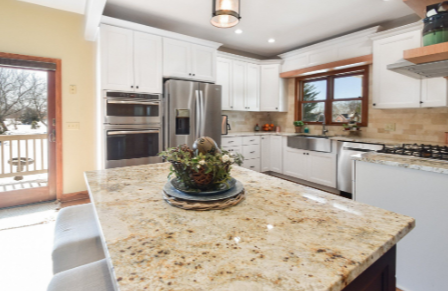
Granite provides natural depth, movement, and mineral veins that vary across each slab.
Colors range from soft neutrals to dramatic blacks, greens, and blues depending on the quarry.
Use quartz if you need exact color matching or contemporary, uniform visuals.
Choose granite for organic texture and distinct, natural character that makes each countertop unique.
Durability and Strength
Quartz is nonporous because of its resin content, so it resists staining from wine, oil, and most household acids without sealing.
It’s highly scratch-resistant but can melt or discolor if exposed to very high heat from hot pans.
Granite is very hard and heat-resistant; brief contact with hot cookware rarely damages it.
However, granite is porous and typically requires periodic sealing to reduce staining and bacterial ingress.
For heavy staining risk and minimal maintenance, quartz performs better.
For heat exposure and natural hardness, granite has the edge but needs routine sealing.
Environmental Impact
Quartz production uses mined quartz plus polymer resins and energy-intensive manufacturing; resin content means some products rely on petrochemicals.
Some brands offer recycled content or certifications (like GREENGUARD) and lower-VOC resins; check specifications for sustainability claims.
Granite extraction involves quarrying large stone blocks and significant transport, leading to higher embodied energy from extraction and shipping if imported.
Granite is wholly natural and durable long-term; choosing locally quarried slabs reduces transportation footprint.
If low-manufacturing impact and recyclable content matter, compare brand-level environmental data for quartz.
If you favor natural material with potential for lower transport emissions, source granite locally and verify quarry practices.
Choosing the Right Kitchen Countertop Material
You’ll weigh everyday care, upfront and long-term costs, how the slab gets placed in your kitchen, and how long the surface will stay attractive and useful. Make choices based on how you cook, how much time you want to spend on maintenance, and your renovation budget.
Maintenance and Cleaning
Quartz is nonporous and resists staining from oil, wine, and acidic foods, so you can clean it with mild dish soap and a soft cloth. Avoid abrasive pads and high-alkaline cleaners; use a plastic scraper for dried residue.
Granite is porous and requires periodic sealing—typically every 1–3 years depending on use and the stone’s porosity. Clean granite daily with pH-neutral cleaner or mild soap and water. Wipe up spills quickly, especially oil and acidic liquids, to prevent staining.
For both materials:
- Use cutting boards to prevent knife marks.
- Use trivets for hot pans; granite handles heat better but can still crack under sudden thermal shock.
- Address chips with a stone repair kit or call a professional for color-matched fills.
Cost Considerations
Quartz typically carries higher material costs than entry-level granite but can be more predictable because it’s engineered; expect mid to high price ranges depending on brand and pattern. Installation and fabrication add significant cost—complex edges, sinks, and backsplashes raise the price similarly for both.
Granite offers a wide price spectrum: low-cost slabs for tight budgets up to premium exotic stones at luxury prices. Factor in sealing costs and potential long-term maintenance when comparing total cost of ownership.
Get at least three quotes that break out slab cost, fabrication, edging, seams, and removal of old counters so you can compare line by line.
Installation Process
Both quartz and granite require professional templating and heavy, skilled installation because slabs are heavy and unforgiving. Templating: installers measure and create a precise cut plan, often using digital templates or plywood patterns.
Fabrication: edges, sink cutouts, and seam placement happen in a shop. Quartz is easier to seam invisibly since patterns can be matched during fabrication. Granite’s natural veining can make invisible seams harder and may require careful slab selection.
On-site: expect 1–2 days for install after templating; allow for 24–48 hours of adhesive cure time before heavy use. Confirm whether the installer protects cabinets and floors and whether they remove old countertops.
Longevity and Value
Quartz resists stains and surface wear, so it maintains a consistent appearance for decades with normal care. It won’t need resealing, which reduces ongoing maintenance costs and preserves resale appeal for buyers who prefer low-maintenance surfaces.
Granite ages naturally; a well-chosen, well-sealed slab can last a lifetime and may add perceived value because it’s natural stone. However, sealing lapses, deep scratches, or chips can reduce its appearance and require repair.
Consider warranty terms: many quartz brands offer written warranties that cover manufacturing defects, while granite warranties (if offered) typically cover installation issues rather than the stone itself. Choose based on the balance between low-maintenance appeal and the natural aesthetic you prefer.