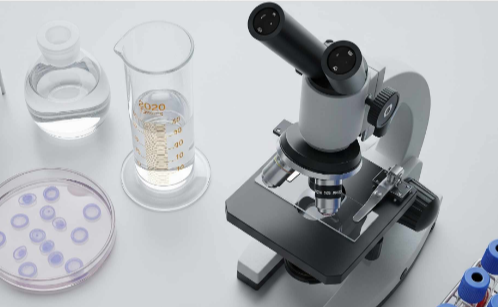
You rely on scientific equipment every time you turn a theory into data, whether you’re calibrating a pipette, running a spectrometer, or tracking samples in a freezer. Good equipment speeds discovery, reduces error, and makes your workflow repeatable—so choosing the right tools matters more than you might think.
This article breaks down the main types of instruments and the practical applications that justify their cost, maintenance, and training needs. Expect clear comparisons, real-world use cases, and guidance to help you match equipment to your goals so you can make confident purchasing and operational decisions.
Types of Scientific Equipment
You will encounter tools for analyzing samples, glassware for preparing and containing reagents, and devices that deliver precise measurements. Each category focuses on functions you’ll use day-to-day: identifying composition, handling liquids safely, and recording accurate values.
Analytical Instruments
Analytical instruments determine composition, concentration, and structure of samples. Common examples include spectrophotometers (measure absorbance across wavelengths), chromatographs (separate mixtures by retention time), and mass spectrometers (provide mass-to-charge ratios for molecular identification). You’ll choose instruments based on sensitivity, throughput, and the type of information required.
Maintenance and calibration matter: keep lamps, detectors, and columns within specification to avoid drift. Many instruments pair with software for data processing; confirm file formats and validation requirements for your lab records. For biological samples, consider contamination control and appropriate consumables like low-bind vials.
Laboratory Glassware
Laboratory glassware provides containers and transfer tools designed for chemical resistance and dimensional accuracy. Essential items include beakers and Erlenmeyer flasks for mixing, volumetric flasks for preparing precise concentrations, graduated cylinders for approximate volumes, and pipettes (air- or positive-displacement) for dispensing small volumes.
Select borosilicate glass for thermal and chemical stability; use plastic alternatives (e.g., polypropylene) when breakage or specific chemical compatibility is a concern. Inspect glassware for cracks and ensure calibration marks are legible. For quantitative work, use calibrated volumetric glassware and certified pipettes to meet accuracy requirements.
Measurement Devices
Measurement devices convert physical properties into numeric values you can act on. Typical instruments include balances (analytical and micro for mass), thermometers and thermocouples (for temperature), pH meters (for acidity/alkalinity), and pressure transducers. Each device has a stated accuracy and resolution—choose the class that matches your procedure’s tolerance.
Routine checks improve reliability: perform weight checks with standards for balances, calibrate pH probes with fresh buffers, and verify thermometers against a certified reference. Record uncertainty and traceability for critical measurements to support reproducibility and regulatory compliance.
Applications of Scientific Equipment
Scientific equipment enables precise measurements, controlled conditions, and repeatable processes across experiments, production, and teaching. Expect tools that measure, manipulate, and protect—each chosen to match the method, throughput, and safety needs of your work.
Research Laboratories
In research labs you use analytical instruments like HPLC, mass spectrometers, and gas chromatographs to quantify compounds and detect trace impurities. Microscopes (optical, fluorescence, electron) reveal structure at cellular and subcellular scales, while spectrometers characterize molecular bonds and elemental composition.
You rely on controlled-environment devices—incubators, fume hoods, glove boxes, and biosafety cabinets—to maintain sterility and contain hazards. Precision balances, automated pipettors, and temperature-controlled shakers improve reproducibility and reduce operator error. Data acquisition systems and lab information management software (LIMS) capture results and trace samples for regulatory compliance.
Industrial Uses
In industry, equipment supports scale, throughput, and quality control rather than exploratory discovery. You use process reactors, industrial centrifuges, and pilot-scale fermenters to produce batches under monitored conditions. Inline sensors (pH, conductivity, NIR spectroscopy) permit real-time process control and reduce waste.
Quality assurance depends on validated instruments: particle size analyzers for materials, tensile testers for mechanical properties, and chromatography for purity checks. Safety and environmental compliance use fenceline gas detectors, wastewater analyzers, and scrubbers. Automation, PLCs, and SCADA systems integrate instruments into production lines to maintain consistent product specifications.
Educational Settings
In teaching labs you prioritize durable, cost-effective equipment that demonstrates principles and keeps students safe. Benchtop microscopes, hot plates, basic spectrophotometers, and simple glassware allow hands-on learning of core techniques like titration, microscopy, and calorimetry.
You must balance instructional value and risk: use low-volume, low-toxicity reagents, syringe pumps for controlled dispensing, and clear safety gear—goggles, gloves, and emergency showers. Digital interfaces and USB microscopes extend teaching by capturing images and exporting data for student reports. Lab kits and modular apparatus help scale lessons from introductory classes to advanced undergraduate projects.