You can face fear without letting it control your life. Exposure therapy teaches you to approach, tolerate, and eventually reduce the anxiety tied to specific situations, memories, or thoughts through repeated, controlled contact.
Exposure therapy works by helping you gradually confront what scares you so your fear response decreases over time. This article explains how the method works, where it helps most (phobias, OCD, PTSD, panic), and what to expect from practical steps and common formats like live, imaginal, and interoceptive exposure.
If you want clear, evidence-based ways to practice exposure safely, the next sections walk through the fundamentals, real-world benefits, and how to apply the approach so you can start making measurable progress.
Fundamentals of Exposure Therapy
Exposure therapy helps you reduce fear by confronting specific triggers in controlled, repeatable ways. It focuses on measurable goals, stepwise practice, and reducing avoidance and safety behaviors to change how your brain predicts threat.
Definition and Purpose
Exposure therapy is a structured, evidence-based behavioral intervention that guides you to face feared situations, objects, memories, or bodily sensations. The primary purpose is to weaken the link between a cue and an intense fear response so that the cue becomes associated with neutral or tolerable outcomes.
You work with a therapist to identify specific targets (for example: public speaking, driving, contamination, intrusive thoughts, or trauma memories). The therapist helps you set concrete goals, track progress, and remove safety behaviors that maintain anxiety—like avoiding situations or using compulsions.
Key aims:
- Reduce avoidance and safety-seeking actions.
- Improve tolerance of distress and anxiety-related sensations.
- Update learned threat expectations through repeated, supported practice.
Types of Exposure Techniques
Therapists choose a method based on your problem, severity, and preferences. Common techniques include:
- In vivo exposure: direct, real-world confrontation (e.g., riding in elevators, touching feared objects).
- Imaginal exposure: purposely revisiting distressing memories or feared outcomes in detail when real exposure isn’t feasible or safe.
- Interoceptive exposure: intentionally inducing feared bodily sensations (e.g., increased heart rate, dizziness) to reduce panic-related fear.
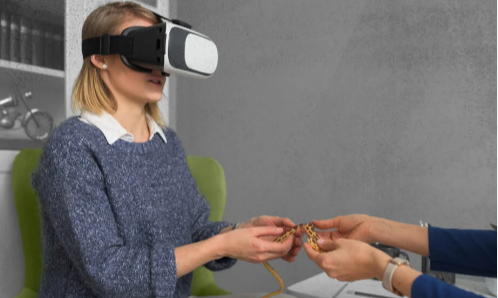
- Virtual reality exposure: simulated environments when real situations are impractical.
You usually follow a graded hierarchy, starting with lower-intensity tasks and progressing. Sessions may combine techniques; for example, you might use imaginal exposure for trauma memories and in vivo practice for avoidance behaviors.
How Exposure Therapy Works
Exposure therapy operates on learning principles: repeated, controlled confrontation produces new, corrective learning that competes with prior fear associations. Each successful exposure provides evidence that the feared outcome is unlikely or tolerable, which reduces fear predictions over time.
Practically, your therapist helps you design exposures that last long enough for anxiety to peak and then decline (habituation) or that allow you to test catastrophic beliefs directly (expectancy violation). You also reduce or eliminate safety behaviors, because these actions can prevent the corrective learning that exposure aims to produce.
Typical structure:
- Assessment and hierarchy creation.
- Repeated exposures with measured durations and intensity.
- Monitoring of fear ratings and functional outcomes.
- Gradual generalization to real-life settings and maintenance strategies.
Benefits and Applications of Exposure Therapy
Exposure therapy helps you confront feared situations, memories, or urges in a structured, controlled way so distress decreases over time. It builds specific coping skills and reduces avoidance that keeps problems intact.
Effectiveness for Anxiety Disorders
Exposure therapy directly targets the learning processes that maintain anxiety, such as avoidance and catastrophic predictions. You systematically face anxiety-provoking situations—real or imagined—so your fear response weakens through repeated safe experiences.
Research shows exposure as a first-line component of cognitive behavioral therapy for generalized anxiety, panic disorder, and social anxiety because it reduces panic attacks, excessive worry, and anticipatory avoidance.
In-session practice combines therapist guidance with between-session “homework” assignments you complete to generalize gains.
Common formats include imaginal exposure for worries and interoceptive exposure for panic symptoms. These focus on specific triggers and measurable goals, such as reducing avoidance of crowded places or decreasing frequency of safety behaviors.
Treating PTSD and Trauma
Exposure helps you process traumatic memories without retraumatizing you by using a graded, controlled approach.
You repeatedly recount or imagine the trauma in safe therapeutic conditions (prolonged or narrative exposure) to reduce the intense emotional charge and to integrate the memory into your broader life story.
Therapists pair exposure with skills for grounding and emotional regulation to manage distress during sessions.
Evidence supports exposure-based protocols—like prolonged exposure—for lowering flashbacks, nightmares, and hypervigilance. You may also work on trauma reminders in real life to reclaim activities and places you’ve avoided.
Utilization for Phobias
Exposure is the most direct treatment for specific phobias because it targets the exact object or situation (e.g., spiders, flying, elevators).
You progress through a fear hierarchy—starting with low-anxiety steps and moving toward more challenging exposures—until your anxiety declines at each level.
Brief, intensive formats (single-session treatments) can work for some phobias, while others require multiple sessions and between-session practice.
Therapists coach you in relaxation and cognitive restructuring as needed, but the core mechanism remains repeated, controlled contact with the feared stimulus so avoidance no longer reinforces fear.
Role in Obsessive-Compulsive Disorder
In OCD, exposure pairs with response prevention (ERP): you face obsessive triggers while purposely refraining from compulsive rituals.
This breaks the cycle where rituals reduce anxiety temporarily but reinforce obsessions long-term.
ERP targets specific obsessions (contamination, checking, intrusive thoughts) with tailored exposure tasks and graduated difficulty.
You learn that anxiety decreases without rituals and that intrusive thoughts are not dangerous.
Therapist-guided ERP includes homework, measurable targets (e.g., delaying a compulsion by fixed minutes), and strategies to manage spikes in distress so you gain control over compulsive behaviors.