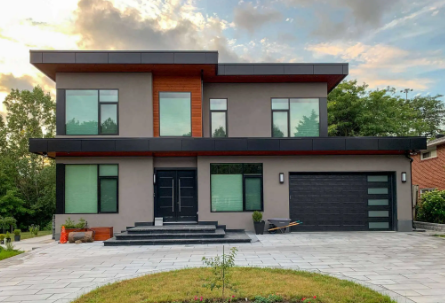
You’ll find ACM aluminum composite panel when you want a lightweight, durable, and visually flexible cladding material that simplifies modern façades and signage. ACM combines two thin aluminum sheets bonded to a core (often fire-rated or polyethylene) to deliver flatness, weather resistance, and ease of fabrication, so you can achieve crisp profiles, curves, or large-format panels without excessive weight.
This post will show what makes ACM perform — from core types and safety ratings to surface finishes and bending limits — and how those properties affect your choices. You’ll also see where ACM shines in real projects and what common installation methods and detailing issues you should expect.
Essential Properties of ACM Aluminum Composite Panel
ACM panels pair thin aluminum faces with a core that controls weight, strength, and fire performance. You’ll find options that balance flatness, weather resistance, and cost for exterior facades, signage, and interior cladding.
Material Composition
ACM panels consist of two pre-painted or coated aluminum sheets bonded to a central core. The aluminum facers are typically 0.3–0.5 mm thick each and determine surface finish, color durability, and scratch resistance.
The core can be polyethylene (PE), mineral-filled polyethylene, or fire-retardant (FR) mineral core. PE cores are lightweight and economical but have low fire resistance. FR cores use mineral fillers or non-combustible materials to meet fire codes such as EN 13501-1 or ASTM E84 (check specific product ratings).
Bonding uses high-strength adhesives under heat and pressure to create a flat, stable sandwich. This bonding process affects panel flatness, edge integrity, and long-term delamination risk.
Key Features
You’ll select ACM for a combination of flatness, low weight, and aesthetic flexibility.
- Flatness & rigidity: Aluminum facers plus a rigid core deliver excellent dimensional stability across large spans.
- Weight: Typical densities keep panels lightweight—facilitating faster installation and reducing framing loads.
- Finishes: PVDF, polyester, and anodized finishes offer different UV, chemical, and color-retention properties; PVDF provides the best long-term color stability.
- Formability: You can bend, fold, and route ACM for complex profiles, but minimum bend radii depend on facer thickness and core type.
- Thermal expansion: Aluminum and the core expand at different rates; designers must allow joints and fastener spacing to accommodate movement.
Panel Thickness Options
ACM panels come in standard total thicknesses commonly ranging from 3 mm to 6 mm, with facers typically 0.3–0.5 mm.
Common thickness choices:
- 3 mm: Lightweight, suitable for signage and interior applications.
- 4 mm: Most commonly used for exterior cladding—balances rigidity and cost.
- 6 mm: Offers greater stiffness for larger spans or deeper reveals.
Thicker facers (0.4–0.5 mm) improve impact resistance and allow tighter bends; thinner facers reduce cost and weight. Core selection also influences effective stiffness—an FR core can be slightly denser and affect panel handling and fastener performance.
Specify thickness based on span, wind load, desired reveal depth, and bending/forming needs.
Durability and Lifespan
Durability depends on facade exposure, finish system, and maintenance. PVDF-painted aluminum facers resist fading and chalking for decades when installed correctly.
Corrosion resistance is high when you avoid galvanic contact with dissimilar metals; use compatible fasteners and isolation materials. Edge sealing and correct joint details prevent moisture ingress that could degrade cores, especially PE cores.
Fire performance affects serviceability: PE cores can melt or burn, so panels with FR or mineral cores are required where codes demand higher fire resistance. Lifespan typically exceeds 20 years for exterior-grade systems with quality finishes and routine maintenance, but this varies with climate, pollutants, and mechanical wear.
Applications and Installation Methods
ACM aluminum composite panels serve multiple functional and aesthetic roles across exteriors, interiors, and signage. Their lightweight strength, flatness, and finish options determine where you use them and which installation method suits your project.
Architectural Facades
You can use ACM for curtain walls, rainscreens, and cladding on commercial and residential buildings. Panels resist weather and provide a uniform finish; choose fire-rated cores (FR) for high-rise or code-sensitive façades.
Mounting systems include through-fix, face-fix, and concealed-rail systems. You must design for thermal expansion: typical panel joint gaps range about 10–15 mm to prevent buckling.
Specify support framing (aluminum or steel substructure), corrosion-resistant fasteners, and appropriate sealants at joints and penetrations.
Pay attention to wind-load calculations, acoustic requirements, and building code compliance where you submit shop drawings and performance data.
Signage and Branding
ACM excels for flat, dimensional, and illuminated signs because it cuts cleanly and accepts paint and vinyl. You can fabricate letters, sign panels, and lightbox faces with routed edges and formed returns.
Use thicker panels or reinforced backing for free-standing or larger signs to minimize deflection. For illuminated signs, select translucent finishes and coordinate internal supports for LED modules.
Attachment methods include mechanical fasteners, stand-offs, and adhesive bonding; always use structural adhesives rated for exterior use and test bond strength.
Consider anti-graffiti coatings and UV-stable finishes if your signage faces high sun exposure or vandalism risk.
Interior Design Uses
You can apply ACM in interior walls, ceiling soffits, elevator surrounds, and feature walls for a sleek, durable surface. Lightweight panels reduce load on partitions and speed installation in retrofit projects.
Finish options include PVDF, polyester, and anodized surfaces for different budgets and durability needs. Choose fire-rated cores for egress corridors and public spaces to meet code.
Detail around penetrations, trims, and joins to maintain clean lines; use concealed fasteners for seamless appearance.
Acoustic performance is limited; combine panels with insulation or acoustic backer when sound control matters.
Installation Techniques
Prepare substrate and framing: ensure plumb, straight rails, and a ventilated cavity for rainscreen installations. Use levels and laser guides to maintain consistent joint widths.
Common fixation methods:
- Mechanical fasteners: screws and rivets through shims or clips for secure hold.
- Concealed clip/rail systems: allow thermal movement and clean sightlines.
- Adhesive bonding: for non-structural panels and signage with proper surface prep and testing.
Seal joints with compatible gaskets or silicone; plan for drainage and back-ventilation to avoid moisture trapping.
Inspect fastener corrosion resistance, torque settings, and panel flatness during install. Conduct a mock-up for finish approval and thermal movement verification before full installation.